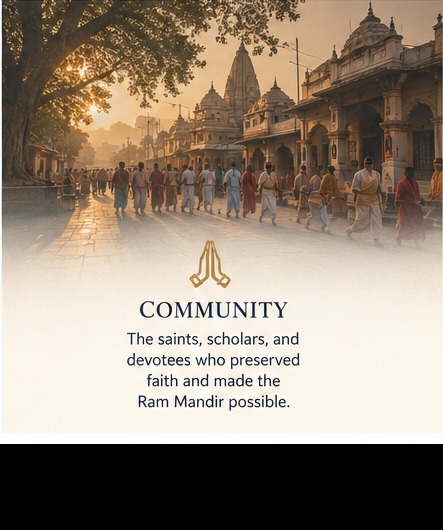
Behind every temple, every ghat, every flame lit at dusk, there are hands that have tended this sacred geography for generations. Ayodhya's community is not separate from its dharma—they are the living transmission, the keepers who held memory alive through centuries when forgetting would have been easier.
For 500 years, local families maintained the knowledge of where Rama was born. Not approximately. Not symbolically. Exactly. When the Babri Masjid stood on the disputed site, priests still performed puja in the structure's outer courtyard. When legal battles dragged through decades, artisans still carved Rama's image into stone. When modernity dismissed mythology, grandmothers still taught children the Ramayana before they taught them the alphabet. This was not blind faith. This was civilizational stubbornness—the refusal to let political power rewrite sacred truth.
The January 2024 consecration transformed their struggle from resistance to validation. The people who held memory for five centuries were not proven right—they were finally acknowledged. The difference matters. They always knew. The world finally agreed. And with that agreement came not just pride but relief. The Ram Mandir's completion ended an exhaustion that had lasted half a millennium.
Now Ayodhya's residents navigate a new reality: prosperity following vindication. Property values soared. Tourism exploded. Economic opportunity arrived at scale. Yet the community has resisted the trap of commercialization swallowing spirituality. Hotel owners still close for evening aarti. Artisans carving Ram Mandir replicas understand they are not making souvenirs—they are crafting devotional objects that will sit in someone's home altar, carrying prayer for decades.
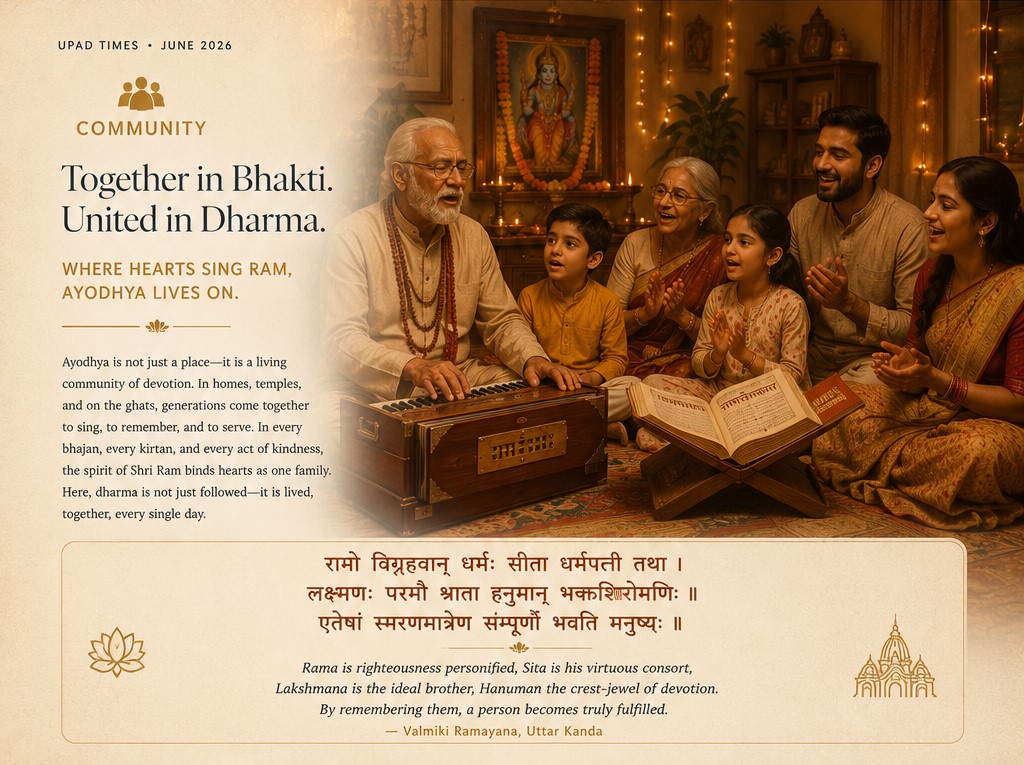
Together in Bhakti · United in Dharma · Where hearts sing Ram, Ayodhya lives on.
The local schools teach Ramayana as core curriculum, not as mythology but as moral foundation. Children learn that Rama chose exile over confrontation, that Sita chose dignity over comfort, that Lakshmana chose service over independence, that Hanuman chose devotion over everything. These are not stories. They are templates for living.
During Deepotsav, it is Ayodhya's residents who organize the spectacle of millions of earthen lamps. They are not performing for tourists. They are enacting their identity. Each family participates—molding diyas from clay, filling them with oil, lighting them at dusk, watching their city become constellation.
“Bhavya” — a word from my decades old, now rusty Hindi, came immediately to mind as we walked into the Janmabhoomi complex — grand indeed.
The architectural detail, the care and precision all reveal themselves in bringing the story to life on each step up to the temple.
An experience in culture and history to treasure!
— Sanjay Rishi
Renukoot, UP once · Detroit, MI sinceWhen you visit Ayodhya and receive prasad from a shop owner, when a priest guides you through rituals, when an artisan shows you their work, you are not encountering service professionals. You are meeting the living links in a chain stretching back to Rama himself—people who held the line, kept the faith, and earned the right to say: We never forgot. We were always here. Welcome home.