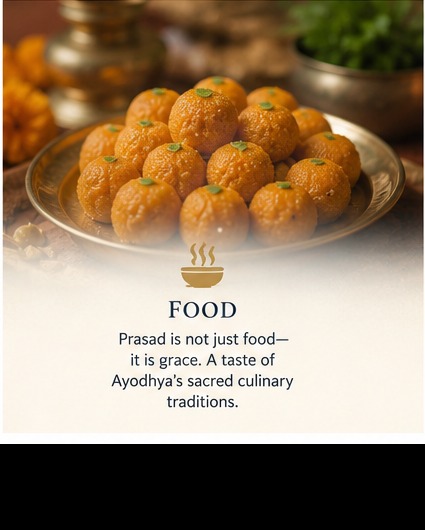
Satvik Philosophy
When Food Becomes Offering
In Ayodhya, food is first offered to the Divine before it touches human lips. This is not custom. It is transformation. Rice becomes prasad. Water becomes tirtha. The act of eating becomes communion. Every meal in Ayodhya carries the possibility of grace—not because the ingredients are special, but because intention sanctifies what would otherwise be mere nutrition.
The philosophy is satvik—pure, life-giving, consciousness-elevating food that nourishes body and spirit together. Satvik food avoids meat, garlic, onion, and anything that agitates the mind or dulls awareness. It is not restriction. It is refinement. The goal is not to deny pleasure but to elevate it—to move from taste that gratifies the tongue to taste that quiets the mind and opens the heart.
Panchamrit: The Five Nectars
At the Ram Mandir, prasad takes a specific form: Panchamrit, the five nectars. Milk, curd, ghee, honey, and sugar mixed together represent the five elements, the five senses offered in devotion. To receive Panchamrit is to receive the world's essence concentrated into a single taste. You do not consume it. You accept it. You let it dissolve on your tongue and feel the intention behind it—the devotion of those who prepared it, the blessing of the deity to whom it was offered, the grace that transforms ordinary ingredients into sacrament.
When millions of pilgrims receive the same prasad from the same temple, they participate in collective nourishment. They eat the same blessing. They taste the same grace. For that moment, distinctions of caste, class, region, language dissolve. All are devotees. All are hungry. All are fed.
Distinctions of caste, class, region, language dissolve. All are devotees. All are hungry. All are fed — through the same prasad, the same blessing, the same grace.
Grace, Not Transaction
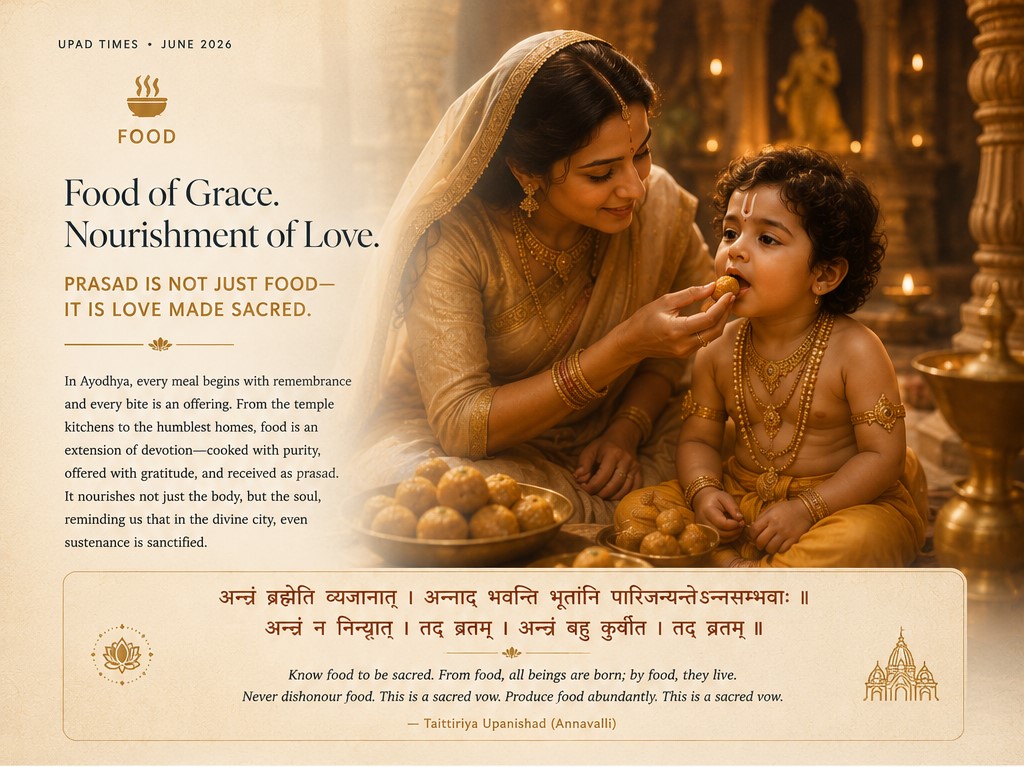
Food of Grace · Nourishment of Love · Prasad is not just food — it is love made sacred.
Outside the temple, Ayodhya's food culture extends the same principle. Street vendors selling pedas, shops offering laddus, households preparing khichdi for distribution to the poor—all understand that food in Ayodhya is offering, not transaction. Money exchanges hands. People earn their living. But they are not selling food. They are facilitating grace.
The prasad distributed at Ram Mandir carries more than calories. It carries intention, devotion, the touch of hands that prepared it with love. The farmer who grew the grain, the vendor who transported it, the maharaj who prepared it, the priest who offered it, the server who distributed it—each participated in turning soil into sacrament. In Ayodhya, every meal is communion. Every bite is blessing. Every taste is grace.